
Roofing advice is full of shortcuts, half-truths, and assumptions that sound reasonable but can lead to delayed repairs or unnecessary expense. For households in Nassau, NY, seasonal weather, older housing, tree cover, ice, wind, and changing temperatures can all affect how a roof performs.
Understanding what is true—and what is not—makes it easier to notice problems early and make sensible maintenance decisions.
Does a roof only need attention when it leaks?
No. A visible leak is often a late warning sign, not the beginning of the problem.
Water may travel along roof decking, insulation, rafters, or interior walls before appearing as a ceiling stain. By the time a leak is visible indoors, surrounding materials may already have absorbed moisture. Some roof problems never create an obvious ceiling mark at all. Loose flashing, damaged shingles, blocked drainage, and poor ventilation can reduce service life without producing immediate interior damage.
Useful warning signs include:
- Missing, lifted, cracked, or unusually curled shingles
- Granules collecting in gutters or near downspouts
- Rusted or separated flashing around roof openings
- Sagging areas along the roofline
- Damp attic insulation or musty odors
- Daylight visible through the roof deck
- Repeatedly peeling paint near ceilings or upper walls
A roof does not need to be actively leaking to deserve inspection or maintenance.
Does a newer roof require no maintenance?
No. A new roof usually needs less corrective work at first, but it still depends on proper drainage, ventilation, flashing, and routine observation.
Leaves, small branches, and windblown debris can collect in valleys and drainage areas. Moss or algae may develop in shaded, damp locations. Gutters can pull away from the roof edge, and flashing can be disturbed by storms or nearby construction. These issues may not be caused by the roofing material itself, but they can shorten the roof’s useful life.
Maintenance does not mean constantly disturbing the roof. It generally means checking visible conditions, keeping drainage paths clear, observing the attic, and addressing small problems before they spread.
Is every dark roof streak a sign of serious damage?
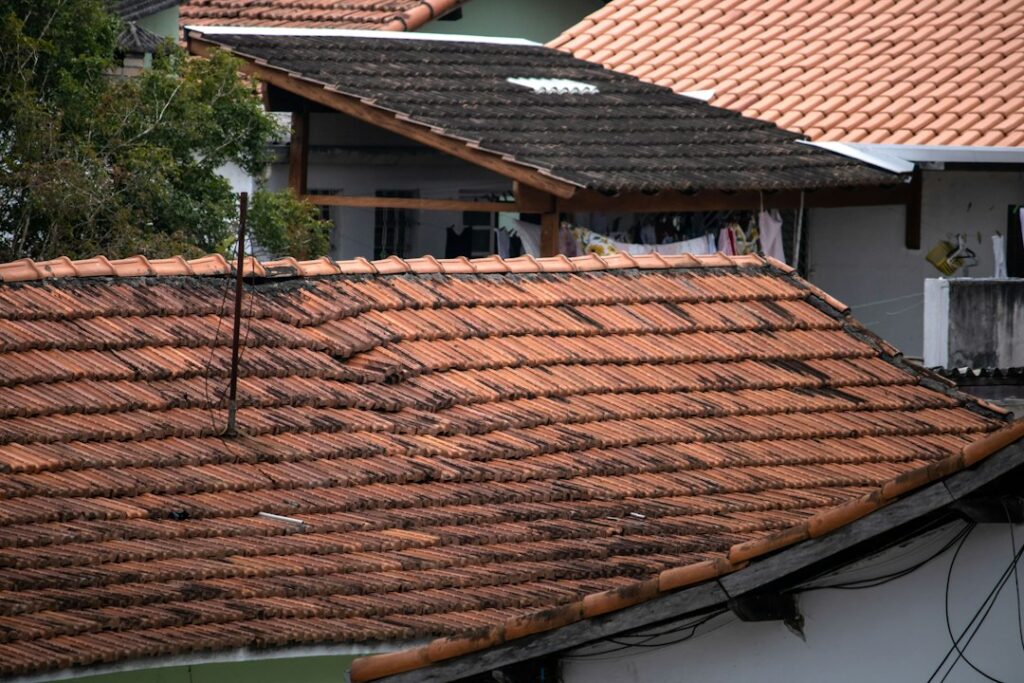
Not necessarily. Dark streaks are often caused by algae growth, especially on roof surfaces that remain damp or receive limited sunlight. Algae can affect appearance without immediately weakening the roofing material.
Moss is more concerning because it can hold moisture against the roof and, as it grows, lift or displace shingle edges. Heavy organic buildup may also block drainage. However, aggressive cleaning methods can cause damage. Pressure washing can remove protective granules, loosen shingles, and force water beneath roofing layers.
The appearance of staining should be evaluated alongside the roof’s age, material condition, slope, drainage, and surrounding shade. Cosmetic discoloration and active deterioration are not always the same problem.
Does replacing a few shingles solve every small roof issue?
Only if the damaged shingles are the actual source of the problem.
Roofing systems contain several connected components, including shingles or other surface materials, underlayment, flashing, ventilation, decking, and edge details. A leak near a chimney, wall, skylight, vent, or roof valley may continue even after nearby shingles are replaced if the underlying flashing or water-shedding detail is faulty.
A small repair can be appropriate, but the location of the interior stain does not always match the location where water entered. Water can move sideways before becoming visible inside the home.
Is the oldest part of the roof always the part most likely to fail?
Age matters, but it is not the only factor.
A roof section with a southern or western exposure may weather differently from a shaded northern section. Areas beneath overhanging branches may experience more debris and moisture. Valleys and low-slope sections often handle more water than broad, steep surfaces. Roof openings and edges can also develop problems sooner than the field of the roof.
Two roofs of the same age may be in very different condition because of ventilation, installation quality, storm exposure, maintenance history, and material type. Age is useful context, but visible condition and performance provide better evidence.

Does a roof need to be replaced just because it reaches a typical lifespan?
No. Published service lives are estimates, not expiration dates.
Roofing materials may last longer or shorter than expected depending on installation, ventilation, weather exposure, maintenance, and the quality of the roof deck. A roof near the upper end of its expected life may still be serviceable if it remains watertight and structurally sound. Conversely, a newer roof may need attention after severe wind, impact, poor drainage, or installation defects.
Replacement becomes more likely when deterioration is widespread, repairs are recurring, materials are failing across large areas, or the roof system can no longer reliably shed water. A calendar date alone does not answer that question.
Does attic ventilation prevent all roof problems?
No. Proper ventilation can help control heat and moisture, but it is not a cure for every roofing defect.
Warm, moist air from the living space can enter an attic through gaps around light fixtures, pipes, ductwork, attic hatches, and other openings. If that air condenses on cold surfaces, it may contribute to damp insulation, mold growth, wood deterioration, or frost in winter. Ventilation works best when paired with air sealing and adequate insulation.
More vents are not automatically better. Poorly balanced intake and exhaust ventilation can perform poorly, and vents placed in the wrong locations may allow wind-driven rain or snow to enter. The design needs to match the roof shape and attic arrangement.
Can gutters prevent roof leaks?
Gutters help control runoff, but they cannot prevent every type of leak.
A clogged or undersized drainage system can cause water to overflow near fascia boards, siding, windows, foundations, and roof edges. In cold weather, trapped water may freeze and contribute to ice buildup along the eaves. Nassau, NY homes can experience repeated freeze-thaw cycles, making drainage and edge conditions worth watching during winter and early spring.
Gutters do not replace sound flashing, intact roofing materials, proper slopes, or good roof-to-wall details. They are one part of the water-management system.
Is a roof safe to inspect from the ground only after a storm?
A ground-level check is useful, but it may not reveal all storm damage.
Wind can loosen shingles without removing them completely. Hail or falling branches may cause bruising, cracks, or punctures that are difficult to see from below. Flashing can shift, and small openings can allow water entry during later rainfall.
After severe weather, look for debris, exposed underlayment, displaced materials, new stains, and changes in the roofline. Walking on a roof can be dangerous, especially when surfaces are wet, steep, icy, or damaged. Safety concerns and suspected structural problems warrant evaluation by someone qualified to work at height.
Does every roofing problem require immediate replacement?
No. Many issues can be addressed with limited repairs, improved drainage, flashing work, ventilation corrections, or replacement of isolated materials.
Immediate attention is more appropriate when there is active water entry, a sagging roof deck, exposed interior materials, widespread storm damage, or a condition that could threaten occupants or surrounding property. Smaller concerns should not be ignored, but they do not automatically mean the entire roof has failed.
The most reliable approach is to separate three questions: what is damaged, what caused the damage, and how widespread the condition is. That distinction helps prevent both neglect and unnecessary replacement.
