
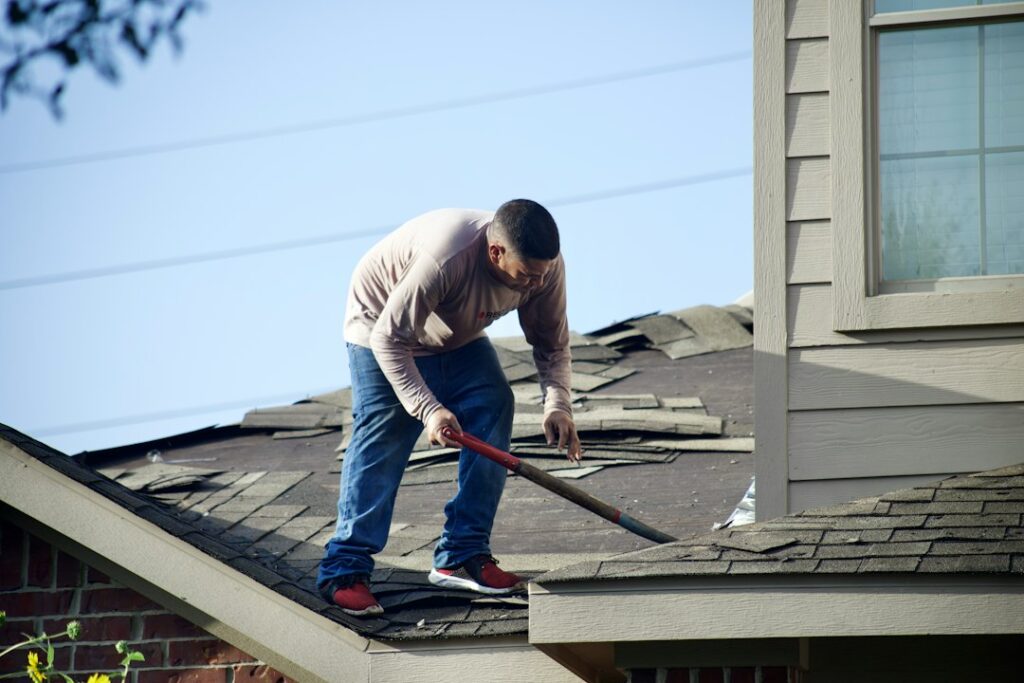
Removing debris from a roof is usually a maintenance task, but it can become dangerous quickly. Leaves, branches, pine needles, moss, and storm debris can hide damaged shingles, clog drainage paths, and add unnecessary weight. In Nassau, NY, seasonal leaf fall, winter snow, wind, and freeze-thaw conditions make regular roof checks especially useful.
The safest approach is to inspect from the ground first, remove only light and accessible debris, and avoid walking on the roof unless the surface and conditions are appropriate.
What counts as roof debris?
Roof debris includes any loose material that does not belong on the roof surface or inside the drainage system. Common examples include:
- Fallen leaves and pine needles
- Small twigs and branches
- Seeds, cones, and loose bark
- Windblown litter
- Accumulated moss or organic matter
- Ice chunks or storm-thrown materials
- Dirt that collects behind roof features or in valleys
A small amount of dry leaves may not cause immediate harm. Problems develop when debris stays wet, gathers in thick layers, blocks water, or conceals damage.
Why should debris be removed?
Debris can interfere with how water leaves the roof. Leaves and twigs may collect in valleys, around chimneys, behind plumbing vents, or along the lower edge of the roof. During rain, blocked areas can force water beneath shingles or into the roof structure.
Organic debris also holds moisture against roofing materials. Repeated dampness can contribute to surface deterioration, staining, moss growth, and decay in exposed wood. On asphalt-shingle roofs, trapped moisture may shorten the useful life of the shingles.
Branches deserve special attention after a storm. Even if a branch has not punctured the roof, it may have loosened shingles, damaged flashing, or scraped the protective surface. A roof can appear intact from the ground while still having a small opening that allows water inside.
How can roof debris be removed safely?
Begin with a ground-level inspection. Look for heavy accumulations, visible branches, sagging areas, displaced shingles, damaged flashing, and debris near overhead wires. Binoculars can help identify problem areas without requiring a climb.
For light debris on a low-slope or easily reached roof, use a soft roof rake, leaf blower designed for outdoor use, or a long-handled brush. Work from the edge whenever possible. Pulling debris downward is generally safer than pushing it upward beneath shingles.
A few precautions matter:
- Avoid metal tools that can scratch or tear roofing materials.
- Do not drag heavy branches across shingles.
- Keep blowers at low power and avoid directing air under shingle edges.
- Do not use pressure washers on shingles.
- Keep people and pets away from the area below.
- Wear eye protection when loose sticks, dirt, or insects may fall.
- Stop if the roof is wet, icy, steep, or covered with snow.
Do not use a leaf blower while standing on a ladder unless the ladder is firmly secured and the work can be performed without leaning or overreaching. The force of the blower can affect balance, particularly on a windy day.
Should someone walk on the roof to clear debris?
Walking on a roof is not necessary for every cleanup and can cause damage. Asphalt shingles become brittle in cold weather and soft in intense heat. Foot traffic can loosen granules, crack aged shingles, bend flashing, or disturb areas that were already weakened.
Avoid walking on roofs with steep slopes, wet surfaces, frost, ice, snow, or visible damage. Slate, clay, wood, and other specialty roofing materials can be particularly vulnerable to breakage.
If debris cannot be removed from the ground or from a securely positioned ladder, the condition may be beyond routine household maintenance. Safety takes priority over clearing every leaf or twig immediately.
How should gutters and roof valleys be checked?
Gutters and downspouts are part of the roof drainage system, so they should be inspected along with the roof. Leaves often move from the roof into the gutters, where they can create dams and cause overflow near fascia boards, siding, windows, or foundations.
Check whether:
- Water can enter the gutter freely.
- Downspouts are open at the top and bottom.
- Gutter sections are pulling away from the house.
- Leaves are packed beneath roof edges.
- Valleys contain thick organic buildup.
- Water stains appear on exterior walls or soffits.

A clogged downspout may not be obvious from the ground. During rainfall, look for water spilling over the front of the gutter or running down the side of the building instead of flowing through the drainage path.
What should be done after a storm?
After high winds or severe weather, inspect the roof from the ground before attempting cleanup. Look for large branches, missing shingles, exposed underlayment, damaged vents, bent gutters, and pieces of roofing material in the yard.
Large limbs should not be pulled across the roof. They may be caught on damaged shingles or may be under tension. Cutting or moving them can cause additional injury or property damage.
If a storm leaves a hole, large branch, sagging area, or widespread shingle loss, keep people away from the affected area and use temporary protection only if it can be installed safely from the ground or another secure location. Water intrusion may show up indoors as ceiling stains, damp insulation, peeling paint, or a musty odor.
How often should roof debris be removed in Nassau, NY?
There is no single schedule for every home. A property surrounded by mature trees may need inspection several times during autumn, while a more open property may need attention mainly after storms.
Useful times to check include:
- After strong wind or heavy rain
- During and after peak leaf fall
- Before winter weather
- After snow and ice have cleared
- In early spring, when branches and organic debris become visible
Roof debris should not be confused with ice dams. An ice dam is a ridge of refrozen water near the roof edge that can cause water to back up beneath shingles. Removing loose leaves will not correct an ice dam, and chopping ice with a tool can damage the roof.
When is debris removal too risky for a homeowner?
Routine cleanup should stop when the roof is steep, fragile, icy, badly damaged, or difficult to access. Extra caution is also needed near electrical lines, skylights, chimneys, solar equipment, and unstable branches.
Professional assistance may be necessary when debris is heavy, tangled, located over a large area, or associated with structural damage. This is not simply a matter of convenience: falls, electrical contact, falling branches, and roof collapse hazards can create serious risks.
For most households, the safest maintenance habit is simple: inspect from the ground, remove only light debris that can be reached without unsafe climbing, and treat storm damage or blocked drainage as a separate problem requiring closer evaluation.
